

Risk-Based Validation: The Shift Has Begun. Is Your Organization Ready?
For decades, validation teams have worked hard to demonstrate that computerized systems meet regulatory expectations. Detailed protocols, extensive screenshots, lengthy approval cycles and growing documentation packages have become familiar parts of the process.
But an important question deserves more attention:
Does every document, screenshot and test increase confidence that the system will perform reliably?
In some organizations, the volume of validation documentation has become a measure of quality. Yet more paperwork does not automatically mean better risk control.
The system can have hundreds of test records and still contain weaknesses. Conversely, a well-designed assurance strategy can provide evidence with less unnecessary documentation, if risks are understood, appropriate tests are performed and decisions are justified.

This is the opportunity behind risk-based computerized system validation.
With the FDA's Computer Software Assurance (CSA) guidance in the United States, the ongoing evolution of EU GMP Annex 11 and the principles established in ISPE GAMP5® Second Edition, the industry has a growing opportunity to move from documentation-driven activities toward justified assurance.
And this transformation is about more than regulatory compliance.
It is about protecting products and people, making better use of resources and developing professionals who can lead change with confidence.
Why?
Imagine two validation teams working on the same computerized system. The first team follows a rigid template. Every function receives the same documentation effort, regardless of its intended use or impact.
The second team begins by understanding the business process, the system's purpose and the consequences of potential failures. It identifies what could affect product quality, patient or consumer safety, and data integrity.
Then it selects assurance activities proportionate to those risks. Both teams may produce compliant validation packages. But the second will deliver greater value.
For your company, getting this right can create several benefits:
Compliance should support your business, not slow it down
Companies adopting new technologies face a difficult challenge. They need to implement cloud platforms, digital manufacturing applications, laboratory systems, ERP solutions and sophisticated automation.
At the same time, they must protect regulated processes and maintain reliable records. Treating every function as equally critical consumes time without necessarily improving quality.
Risk-based validation helps the organization distinguish between what is important, what is critical and what requires additional assurance. That distinction is where better decisions begin.
How?
The risk-based approach is not an invitation to eliminate controls. It is an invitation to make every control count.
What?
United States: FDA Computer Software Assurance (CSA)
The FDA's final guidance, Computer Software Assurance for Production and Quality Management System Software, updated in February 2026, encourages a risk-based approach to establishing confidence in software used for medical device production and quality management systems.
The guidance recognizes different assurance methods and promotes an approach proportionate to the risks posed by software features, functions and operations.
For medical device manufacturers, this creates an opportunity to reassess testing and documentation practices that may have become unnecessarily burdensome.
However, one distinction is essential:
FDA CSA is not a blanket exemption from software validation, nor does its specific guidance automatically apply to every computerized system used in pharmaceuticals, cosmetics or other regulated industries.
Organizations must determine which requirements and guidance apply to their products, systems and intended uses.
Nevertheless, its principles of critical thinking, process-risk evaluation and efficient assurance are highly relevant to broader industry discussions.
Europe: EU GMP Annex 11 is evolving
Europe's EU GMP Annex 11 already establishes a risk-management approach for computerized systems used in pharmaceutical GMP activities.
The European Commission's 2025 consultation on a revised Annex 11 signals further emphasis on lifecycle management, supplier oversight, system requirements, data integrity, security and Quality Risk Management.
The proposed revision encourages organizations to look beyond isolated validation deliverables and consider how computerized systems remain controlled throughout their operational life.
The revised Annex 11 was still a draft under the regulatory process as of October 2026; organizations should distinguish proposed requirements from the current applicable text.
For pharmaceutical manufacturers operating in Europe, this is an opportunity to evaluate current governance practices and prepare for potential changes.
GAMP 5®: The practical foundation linking these conversations
Risk-based validation is not new.
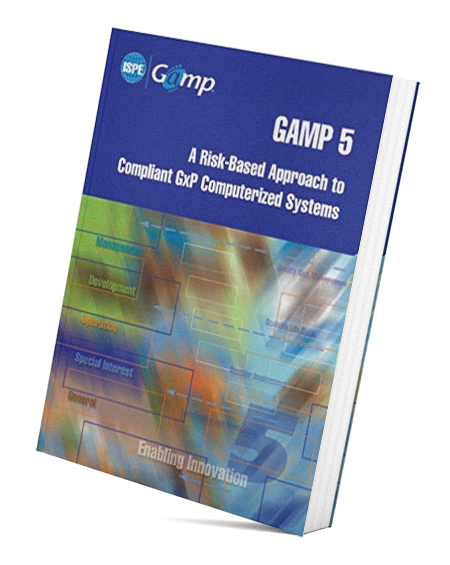
The ISPE GAMP 5® framework has long promoted an approach focused on intended use, patient safety, product quality, data integrity and lifecycle management.
Its Second Edition, published in 2022, places particular emphasis on critical thinking, appropriate supplier involvement and modern technologies.
CSA and the evolving European regulatory discussion reinforce the relevance of these established principles, even though their formal scopes and requirements differ.
The practical question for organizations is no longer simply whether they understand risk-based validation.
It is whether they can implement it consistently.
The career opportunity: Become the professional who knows how to make it work
Regulatory evolution creates a major opportunity for professionals in Quality Assurance, Validation, IT/OT, Engineering and business operations.
Think about the difference between two professional profiles.
One knows how to follow a validation template and complete the required documentation.
The other can explain the intended use of a system, facilitate risk assessments, challenge unnecessary activities, coordinate specialists and defend the rationale behind the assurance strategy.
Which professional is likely to become a trusted advisor to senior management?
The second profile brings more than technical execution.
It brings judgment.
And judgment is valuable when organizations must balance compliance, speed, technology and operational risk.
Your reputation is built on decisions you can defend
A risk-based approach can help you demonstrate several career-defining capabilities:
01 Technical credibility.
You understand regulatory principles and can translate them into practical decisions rather than relying on templates.
02 Business awareness.
You recognize how validation affects project delivery, budgets, implementation schedules and operational continuity.
03 Cross-functional leadership.
You facilitate effective collaboration between Quality, IT, suppliers, business owners and key users.
04 Critical thinking.
You know when to ask for additional evidence, and when existing evidence is sufficient.
05 Professional accountability.
You can explain your decisions, recognize limitations and document the rationale supporting them.
These capabilities can strengthen your reputation as someone who solves problems, rather than identifying more activities to perform. And that reputation matters. Not because less documentation makes someone a better professional, but because knowing what is necessary, and being able to defend why, is a demonstration of expertise.
From validation executor to strategic business partner
Consider a situation in which a manufacturing organization is preparing to deploy a new digital system across several sites.
A conventional approach may begin by generating a large, standardized package of validation documents for each location.
A more mature approach begins by asking:
What is common across the sites? What differs in intended use, configuration or operational processes? Can supplier evidence be leveraged? Which functions introduce GxP risks? What must be verified locally?
The resulting strategy may allow shared evidence to be reused while preserving site-specific accountability.
It also requires someone capable of bringing together different teams and making sound decisions.
That person is not merely executing validation.
That person is helping the company manage digital transformation responsibly.
This is how validation professionals can increase their influence and career opportunities.

Where should your company start?
You do not need to redesign your entire validation program overnight.
A practical transition can begin with a pilot and measurable objectives.
Why start from scratch when knowledge already exists?
Every validation project generates valuable knowledge: requirements, risk assessments, test scenarios and lessons learned.
When reviewed and standardized, these assets can be reused across similar systems, processes and sites, reducing repetitive activities without compromising risk-based decisions.
The goal is not to replicate validation blindly. It is to reuse what is applicable, justify what differs and focus on new effort where it adds value.
Validation does not end at go-live. Maintaining the validated state is an ongoing responsibility.
Systems evolve. Software is updated. Business processes change. New risks emerge.
Maintaining the validated state requires a risk-based approach throughout the system lifecycle, including change control, deviation management, periodic reviews, and continuous assessment of compliance and data integrity.
Not every change requires revalidation. What matters is understanding its impact on the system's intended use, product quality, patient or consumer safety, and data integrity, and determining the appropriate level of assurance.
Risk-based validation is not just about establishing confidence before go-live. It is about sustaining confidence, maintaining compliance, and ensuring the system remains fit for its intended use throughout its operational life.
Better validation begins with better questions
The next generation of computerized system validation will not be defined by the number of documents produced. It will be shaped by the quality of decisions made throughout the lifecycle. For companies, the opportunity is to protect critical processes while improving efficiency and accelerating responsible innovation.
For professionals, the opportunity is to become recognized for technical competence, leadership and sound judgment. And for the people who depend on safe and reliable products, the opportunity is better protection through quality assurance.
The future of validation is not about doing less. It is about knowing what matters most and doing it well.
Ready to make your validation strategy more effective?
Discover how FIVE Validation can help your organization adopt a practical, risk-based approach while developing the capabilities of the professionals responsible for delivering it.
Frequently Asked Questions (FAQ)
Risk-based validation focuses resources on critical functions and meaningful risks, while digital validation streamlines documentation, automates workflows, strengthens traceability and reduces repetitive manual activities.
When combined with Quality by Design, these approaches also help identify and address weaknesses early, reducing late-stage failures, rework and delays that could postpone system deployment.
The benefits extend well beyond lower validation costs:
Faster time-to-market: enabling earlier deployment of reliable systems and supporting the timely introduction of products and process improvements.
Earlier business value: allowing teams to benefit sooner from automation, improved data visibility and more efficient operations.
More robust processes: preventing avoidable failures and strengthening operational consistency.
Better product quality: supporting reliable manufacturing, quality control and data-driven decisions.
Greater scalability: enabling organizations to standardize and reuse validation knowledge across multiple systems and sites.
Actual results depend on system complexity, organizational maturity and implementation effectiveness.
The real return on investment is not just spending less on validation. It is enabling the business to operate sooner, reliably and with confidence.



GAMP5® is a guide that has its intellectual rights reserved by ISPE®. Available for purchase at https://ispe.org/
Regulatory references
The following official and industry sources should accompany the published article: