UN SDGs and ESG: The Role of Companies in Shared Responsibility and Future Strategy
The Beginning of the Sustainable Development Goals (SDGs)
On September 25, 2015, world leaders adopted a set of 17 Global Goals with the mission to end poverty, protect the planet, and ensure prosperity for all as part of the 2030 Agenda for Sustainable Development.
Each goal has specific targets to be achieved by 2030, and the commitment is clear: no one should be left behind. To reach these goals, everyone should do their part, governments, the private sector, civil society, and individuals like you.
The 17 Sustainable Development Goals
1. No Poverty
2. Zero Hunger and Sustainable Agriculture
3. Good Health and Well-Being
4. Quality Education
5. Gender Equality
6. Clean Water and Sanitation
7. Affordable and Clean Energy
8. Decent Work and Economic Growth
9. Industry, Innovation and Infrastructure
10. Reduced Inequalities
11. Sustainable Cities and Communities
12. Responsible Consumption and Production
13. Climate Action
14. Life Below Water
15. Life on Land
16. Peace, Justice and Strong Institutions
17. Partnerships for the Goals
These goals are interconnected and should be viewed as an integrated roadmap to guide governments, businesses,
and civil society toward sustainable and inclusive development.
SDGs and ESG: An Essential Connection
The ESG (Environmental, Social, and Governance) movement translates the commitments expressed in the SDGs into the corporate world. While the SDGs provide a global vision, ESG has become the practical business language used to measure, monitor, and report environmental, social, and governance impact.
In this way, companies that align their practices with the SDGs and report their ESG indicators demonstrate not only social responsibility but also long-term strategy, resilience, and competitiveness.
How Companies Are Held Accountable and Why They Should Pay Attention
Organizations face increasing pressure to align their strategies with the SDGs and ESG criteria. This demand does not come from a single authority but from multiple stakeholders who influence a company’s sustainability and competitiveness:
1. Investors and the Financial Market
- Funds, banks, and insurance companies require ESG criteria.
- Companies that are not aligned lose access to competitive capital.
- Publicly listed companies are evaluated through sustainability indices (e.g., DJSI – Dow Jones Sustainability Index).
- Poor results impact reputation and market value
2. Consumers and Civil Society
- Consumers choose brands committed to sustainability.
- NGOs, the media, and civil society expose inconsistencies.
3. Corporate Clients (Supply Chain)
- Multinational companies require suppliers to be aligned with SDG and ESG standards.
- Misalignment can result in exclusion from the supply chain
4. Governments and Regulators
- Many countries have already incorporated SDG targets into their legislation.
Example: In the European Union, the CSRD (Corporate Sustainability Reporting Directive) requires large companies to report ESG indicators according to the ESRS (European Sustainability Reporting Standards). Although the directive does not directly mandate SDG disclosure, many of its indicators are aligned with the 2030 Agenda targets, reinforcing the connection between ESG practices and the Sustainable Development Goals. Reporting in this area is mandatory for publicly listed companies in the European Union.
Summary:
Companies are held accountable by investors, regulators, clients, and civil society. Failing to comply may result in the loss of contracts, access to financing, competitiveness, and reputation.
It is important to remember that sustainability is not limited to the environment, it is also about ensuring human well-being, promoting dignity, inclusion, and social development. Therefore, supporting associations and social organizations becomes an essential part of this shared responsibility.
Moreover, by supporting initiatives that promote education, citizenship, and human development, companies contribute to something even more strategic: the preparation of the future workforce.
Final Reflection
Society values initiatives aligned with the SDGs and expected companies, governments, and social organizations to take active roles in this global agenda.
More than an obligation, the SDGs represent an opportunity for transformation, for companies seeking innovation, for social organizations pursuing positive impact, and for a society striving for a fairer and more sustainable future.
It is time to see the SDGs not as global goals, but as a strategic path to create value, social impact, and shared prosperity.
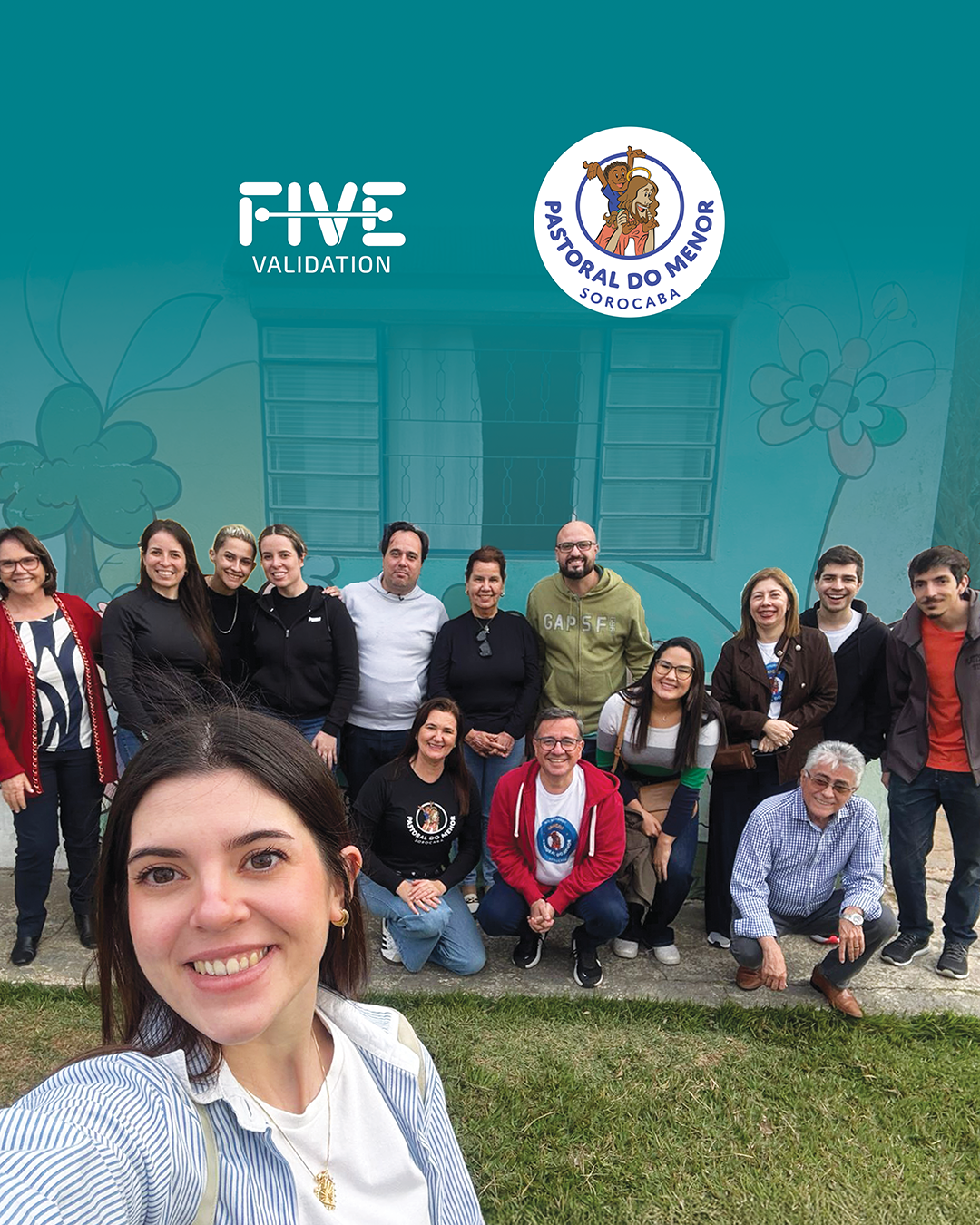
FIVE Validation supports the Pastoral do Menor de Sorocaba, from São Paulo state, Brazil, recognizing the dedicated work carried out for over 22 years, which daily transforms the lives of more than 1,300 children and adolescents in vulnerable situations through after-school educational programs.
The work of Pastoral is connected to key Sustainable Development Goals:
- SDG 1 – No Poverty
- SDG 2 – Zero Hunger and Sustainable Agriculture
- SDG 3 – Good Health and Well-being
- SDG 4 – Quality Education
- SDG 5 – Gender Equality
- SDG 8 – Decent Work and Economic Growth
- SDG 11 – Sustainable Cities and Communities
More than simply fulfilling ESG reporting requirements, supporting initiatives like this means putting the “S” (Social) into practice, strengthening communities and creating impact.
We invite your company to connect with us at [email protected] or directly with the Pastoral do Menor de Sorocaba.
We are available to facilitate the connection and would be delighted to serve as a bridge between your company’s compliance efforts and a solid, transparent, and transformative cause.
Frequently Asked Questions (FAQ) – UN SDGs and ESG

Silvia is Brazilian electrical engineer and entrepreneur with over 23 years of experience in the Life Sciences industry, working mainly in the biotechnology, pharmaceutical, medical device, and cosmetics sectors. She has an international background with specialized training in GAMP5® and FDA 21 CFR Part 11 in England, SAP® validation in Germany, and data integrity and governance in Denmark.
Lives in the Netherlands, Silvia serves as the CEO and co-founder of FIVE Validation, a company dedicated to simplifying regulatory compliance. She is the visionary behind GO!FIVE®, the digital validation platform, and is also responsible for the content of the FIVE Academy training platform.
Her work focuses on accelerating and optimizing processes with robustness, traceability, and compliance, supporting companies in integrating the ESG culture, particularly in the Social (S) and Governance (G) pillars.
Beyond her corporate role, Silvia is available to connect companies from anywhere in the world with the Pastoral do Menor de Sorocaba, in São Paulo, Brazil, an institution aligned with the United Nations’ Sustainable Development Goals (SDGs) and recognized for its social impact, benefiting more than 1,300 children and adolescents in vulnerable situations every day.

Caio is pursuing a bachelor’s degree in international business at HU University of Applied Sciences Utrecht, in the Netherlands, where he studies key subjects essential for the global business environment, such as finance, marketing, business communication, and sustainability, among others.
He completed an internship at Hoogwegt, a Dutch company recognized as a leader in the global dairy trading market, where he worked as a Data Marketing Intern. During this period, he was responsible for preparing the infrastructure of Salesforce Marketing Cloud, enabling the marketing team to create and launch campaigns through the platform.