


What Is Validation in the Life Sciences Industry?
and processes perform as intended and according to their intended use.
Why Is Validation Mandatory?
In the life sciences industry, validation is both essential and mandatory. It ensures safety, quality, and compliance with the regulations established by health authorities in each country.
Failure to properly validate or maintain validation over time creates direct regulatory risks for the company’s operations.
Risk of Non-Compliance:
Validating a system, process, or piece of equipment without properly maintaining it can result in a critical non-compliance, jeopardize the company's Good Manufacturing Practices (GMP) certification, and compromise the entire operation.
In such cases, the time and resources invested in the original validation may be lost, making it necessary to restart the process from the beginning.
Types of Validation in the Life Sciences Industry
Throughout the lifecycle of a pharmaceutical product, for example, there are different types of validation, each governed by its own guidelines and specific processes. What they all have in common is the generation of documented evidence demonstrating compliance.
Computerized Systems Validation (CSV)
Equipment and Utilities Qualification
IT and OT Infrastructure Qualification
Electronic Spreadsheets
Process Validation
Cleaning Validation
Transport Validation
Among others
IT (Information Technology) and OT (Operational Technology, related to industrial automation) are infrastructure categories that also require formal qualification within the regulatory framework.
Traditional Validation vs. Agile Validation
In the traditional waterfall model, a validation document has a single version. Every requirement, risk, and test follows that version, and any change generates addenda that accumulates over time.
The practical result is folders containing partially obsolete original tests, invalidated by Change Controls that are not always organized in a way that clearly indicates which records are no longer valid. This model has increasingly been questioned by regulatory inspectors because it can compromise data integrity.
In Agile Validation, based on item-level management, each requirement, risk, specification, and test is treated as an individual item with its own version control.
Work is conducted through iterative cycles, sprints, and releases. Deliverables may contain different versions within the same document. For example, a test document may include Version 2 tests and Version 1 tests within the same PDF, each individually traceable, approved at different times, or linked to sprints that make up validation phases.
Traditional Model
- Single version per document
- Addenda accumulate over time
- Obsolete tests remain in the original documentation
- Dispersed Change Controls and manual traceability
Agile Validation
- Individual version control for each item
- Iterative cycles, sprints, and releases
- Documentation always reflects the current state
- Change Control linked directly to the modified item version
- Complete traceability compliant with Part 11 requirements
When a change impacts validation, a Change Control (CC) is initiated. This may involve replacing a test from the original validation or adding a new one.
The modified test is replaced with full traceability and linked to the corresponding Change Control number. During an inspection, the documentation presented reflects all tests in their current state, eliminating the need to cross-reference original validation folders with separate Change Control histories.
Agile Validation is accepted and recommended by the FDA and several ISPE® guidelines, establishing itself as the most robust approach for ensuring continuous compliance throughout the product lifecycle.
ISPE® is a registered trademark. All rights reserved.
GO!FIVE®: Agile and Paperless Validation
GO!FIVE® is an Agile and paperless validation platform designed to operate according to the principles described above.
Its architecture is similar to agile software development tools such as Jira, organizing team activities through cards, sprints, backlogs, and continuous delivery.
The key difference lies in what is being managed: in GO!FIVE®, it is the status and version of each validation item that evolves, not the cards themselves.
Each test is individually traceable, with the corresponding Change Control number recorded whenever a new version of an item is generated. Validation phases can be released through sprints according to business needs, always maintaining compliance with FDA 21 CFR Part 11.
The result is a more robust validation process, with preserved data integrity and documentation that is always inspection-ready.
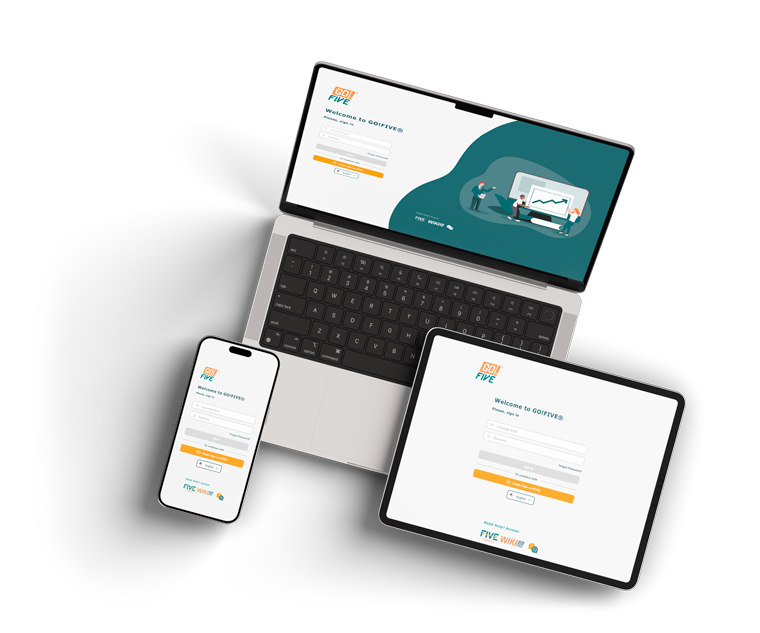
Discover GO!FIVE®
Learn how Agile Validation can be implemented in your operation.